
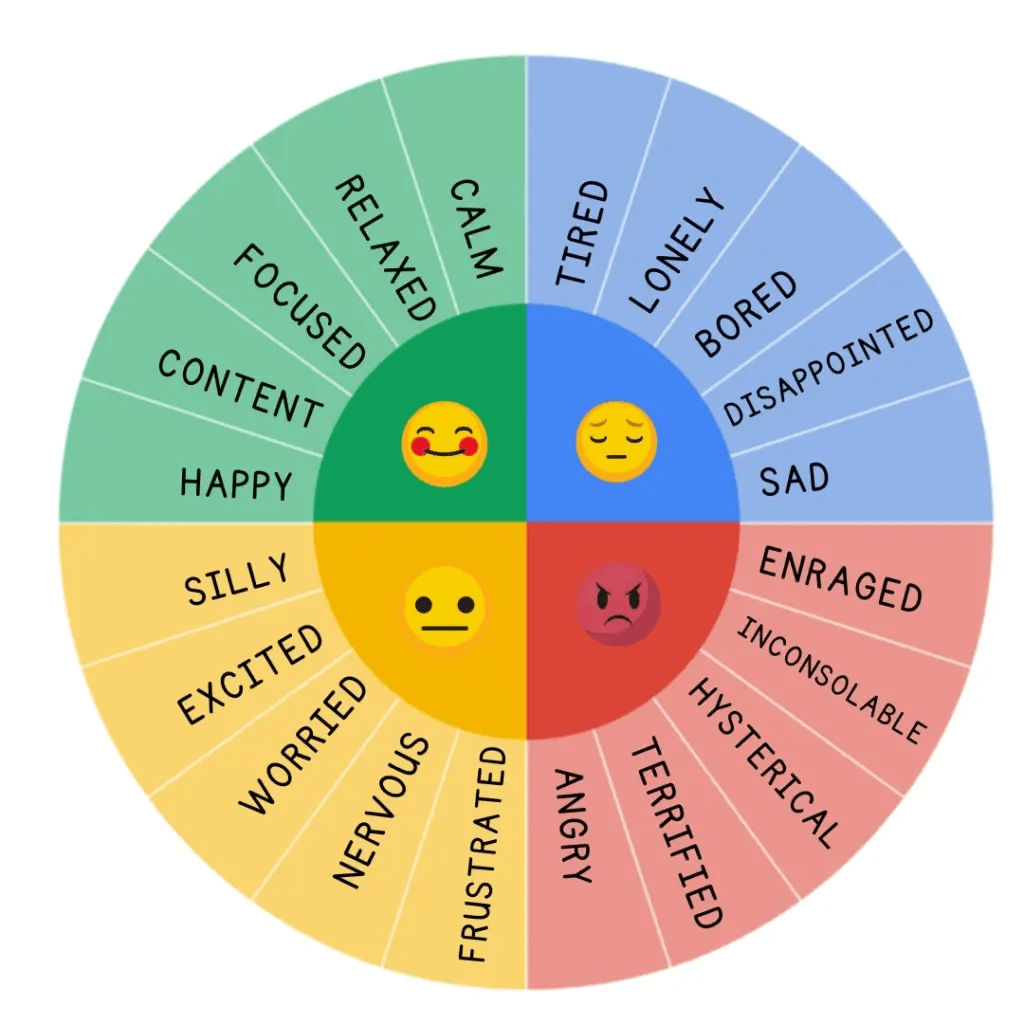
My definition of emotions (based on reading and research): “Emotions, which are highly variable for each unique individual, are our evaluative responses in the brain to situations based on past experiences and learning.” Then, we learn skills (healthy or unhealthy) that support our coping with certain tough emotions. Now to add onto the definition of emotions, is our evaluation accurate? Meaning, are we really in danger when we feel panic (fight, flight or freeze with the activation of the sympathetic nervous system)? The limbic system (part of the emotion processing center which informs the sympathetic nervous system) has an amygdala that stays on high alert which might make us interpret the situation accurately or inaccurately. Is the intensity of our emotions (meltdown) the right response or has that intensity been deepened by trauma, a distorted view, a negative view, or a misreading of the situation. One coping skill to calm is breathing. It helps you level out (get out of survival mode) so you can access your thinking brain vs staying in the emotional brain. Our brain can regulate our bodies if we access it. With the brain being the command center and since emotions are constructed in the brain based on evaluations, we can talk to ourselves/our brains in an encouraging manner. Take a pause to feel the sensations and hear the thoughts going on inside. Find calm through the body-based mechanism of breathing and seek to understand the “why” underneath the emotional intensity. Then, seek to act from a rational view.
By labeling emotions in a paused state of awareness, we can then process them (the emotions) in a healthy way. Many feelings (that may be unlabeled) can overwhelm us or they build up and go unlabeled/unprocessed. Again, life happens so there will be moments that we need help with. Self-awareness is key (what we are feeling in our body and hearing relative to the thoughts in our minds) and should be something we diligently work on along with healthy skills rather than avoiding or comfort eating. Exploring emotions with a calm body and mind helps us deal with our emotions then decide what to do like acceptance or processing emotions with someone or self. Maybe we modify a faulty belief system like I am unworthy or not enough. Maybe I really do need a good cry. Try not to avoid.
Emotions are powerful. We feel them intensely especially at younger ages because emotions typically are processed through the amygdala as teenagers (emotion center) as our prefrontal cortex is not fully developed until age 25. But other things drive us too/that emotional intensity: not sleeping well, stress that builds up over time, past belief systems and traumatic experiences that are unresolved, maybe diagnosis of ADHD or other diagnosis which makes us have more sensitive emotions. Neurodiversity is a superpower (remember that). Regardless of a diagnosis, we can all learn emotion regulation skills and improve our ability to process emotions (in other words, labeling or identifying the emotion then choosing a course of action/addressing a need). Remember: Under every emotion is a need. Under sadness, I may be feeling lonely and therefore I need connection with someone or even an 8 second hug (8 seconds releases oxytocin).
We can misinterpret facial expressions or situations. *The brain makes guesses from past experiences. See: Bing Videos : *The brain regulates the body. Your “brain tells you a story of the world based on your past experiences to affect internal feelings which we label as an emotion.” Feelings are properties of emotions. You can work to regulate your emotions. Cultivate good experiences/make some newer and good memories! Make choices of how you want to act and examine your brain’s predictions now. *Work to heal and act and feel differently.
Watch these videos on interoception (internal awareness): Bing Videos and Bing Videos
See: 10 Interoception Activities for Kids to Support Sensory Processing “Breathe in the flowers, blow out the candles.”
Labeling emotions helps us to process emotions/regulate.
Bing Videos – Theory of constructed emotions: “Emotions are brains way of making sense of internal responses/sensations from the world…..not a reaction, but a construction of the world in the moment.”
Emotional intelligence can help us to process our emotions using the RULER method: See TEDxGoldenGateED – Marc Brackett on emotional literacy.
Try these things daily:
- Grow in self-awareness and EQ by using or improving your interoception. Use the How We Feel app to label emotions and journal in the app. Also, has tools to use to process emotions.
- Or, instead, use an emotion wheel or RULER method to label your emotions and the intensity of them from this self-awareness. By intensity, on a scale of 0-10, is your anger at a 1 or 10 (explosive).
- Then, journal in a notebook about the strategies you utilized to understand your emotions and to process your emotions. Writing prayers can also help you to regulate and process your emotions. We can use the truth of His word over our faulty thinking and thus emotional intensity.
*Optionally watch the following (free) video: How to Process Your Emotions: Course Introduction/30 Depression and Anxiety Skills Course
Good luck with growing in your emotional awareness, processing of emotions towards emotion regulation, and ultimately joy. We are doing away with the distractions of unprocessed emotions to a balanced lifestyle and joy in Him.

 flourishings.blog